If there is one experience that can be labelled as universally shared, it’s being an active participant in the job market, either as a recruiter or as a job seeker. But what happens when the person sending (or opening) the CV isn’t as well intentioned as you initially believed? What if you’re not opening a file from someone who has something to offer, but from someone who intends to steal? The recruitment industry is an enticing target for cybercriminals, who hide behind seemingly innocent résumés or job descriptions. Posing as an employer or an active candidate provides the perfect cover for malicious actors to infiltrate systems through weaponized file uploads, hunting for a goldmine of personally identifiable information ready to be exploited. We’ve seen how easily hackers can breach major platforms. In the summer of 2025 alone, two major job platforms were successfully hacked, leading to the exposure of millions of job seekers’ data. Leaks on this scale expose victims to identity theft, fraud, and further targeted attacks, as the information found in résumés can be used to create fake identities and commit financial crimes. Fortunately, today’s story is not a cautionary tale, but one of foresight.
Our customer, Indeed, ranked as the world’s #1 job site with 635 million Job Seeker Profiles, recognized the threat landscape in which it operates, while also witnessing malware campaigns aimed at its platform. Indeed needed a solution capable of protecting millions of daily uploads and supporting multiple file types. This need led to the adoption of OPSWAT’s MetaDefender Core, specifically its Metascan™ Multiscanning technology, marking the beginning of a collaborative journey toward stronger cybersecurity and improved operational efficiency. We’ve sat down with Garrett Lee, Software Engineering Manager at Indeed, to understand how this collaboration unfolded.
データガバナンスを損なうことなく、強力でスケーラブルかつ高速なソリューションの探求
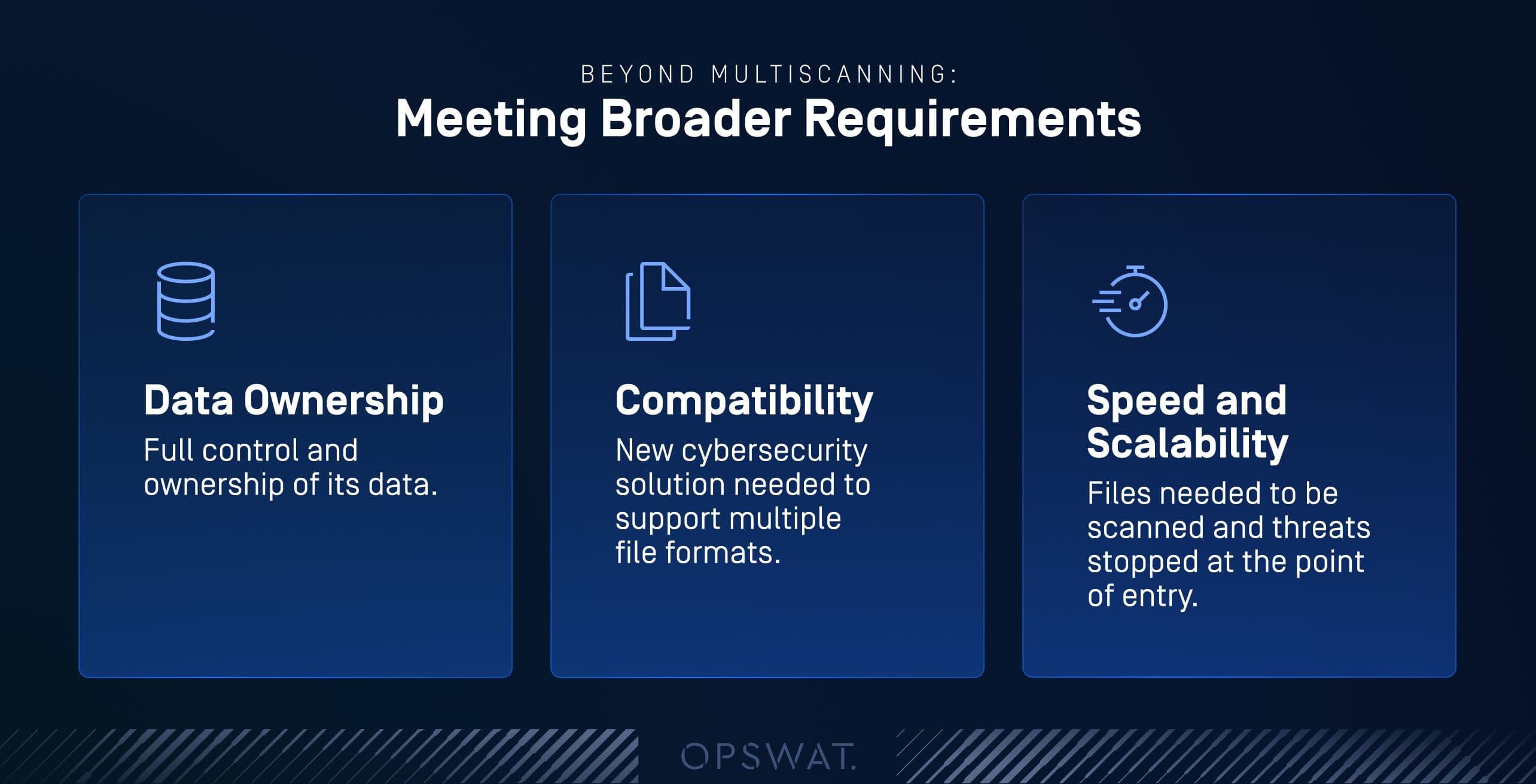
Like many job matching platforms, Indeed wanted to strengthen its platform against the possibility of malicious campaigns aimed at tricking employers into downloading malware onto their computers which could lead to data breaches, account takeovers, or stolen credentials. This marked the beginning of the search for a new, more powerful cybersecurity solution to enhance existing technology. This time, the evaluation went beyond multiscanning alone, as any new solution had to meet a broader set of requirements.
MetaDefender Core is an advanced threat prevention platform that integrates seamlessly with Indeed’s existing infrastructure, protecting against malicious file upload attacks.
They now rely on Metascan Multiscanning and its 30+ leading anti-malware engines to achieve over 99.2% detection, leveraging signatures, heuristics, and machine-learning techniques.
By integrating MetaDefender Core into its infrastructure, Indeed achieved maximum coverage while minimizing development effort and long-term maintenance costs. For Indeed, MetaDefender Core functions almost like a cybersecurity microservice, active both at file upload points and during file exchanges between employers and job seekers.
During the initial setup phase, the OPSWAT and Indeed teams worked closely together to implement readiness checks and database monitoring. Through this close collaboration, Indeed achieved an optimal configuration, enabling efficient infrastructure operation while minimizing resource usage and cloud costs.
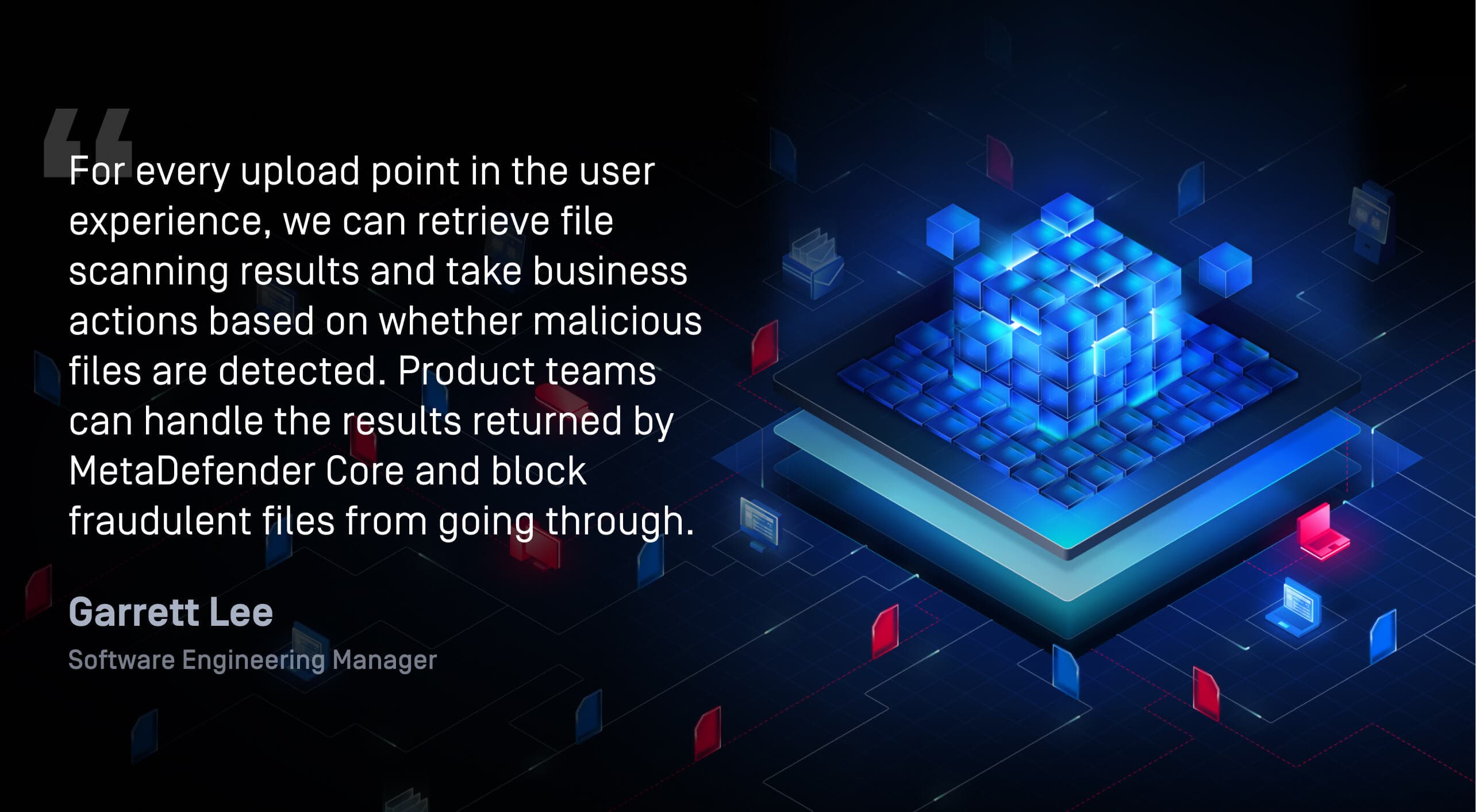
As Garrett Lee explains, “All of this has helped us detect significantly more malicious files, which we can then block to ensure they never reach employers or job seekers. We’ve experienced roughly a 10x increase in files detected as suspicious or unsafe compared to our previous solution.” Since Indeed processes millions of files daily, it was critical to introduce the multiscanning step into the upload workflow without disrupting user experience, system performance, or backend operations.
By implementing MetaDefender Core using a microservices architecture, Indeed simplified infrastructure scaling and established improved latency and availability SLAs. With 24/7 first responders on call, Indeed was able to address issues proactively, ensuring reliable performance at all times.
For Indeed, transferring file scanning responsibilities to a trusted partner - rather than building and maintaining in-house teams - represented a significant cost-saving opportunity. By externalizing cybersecurity operations to dedicated experts, Indeed freed its internal teams to focus on improving and expanding the platform itself.
With OPSWAT as a trusted partner, Indeed’s teams can stay focused on their mission to help people get jobs. Instead of constantly looking for the next threat, Indeed relies on support from OPSWAT to stay ahead of emerging risks and keep the platform secure. And this is how it should be. Through transparent collaborations, where each party brings deep expertise, the ecosystem becomes stronger for everyone. If your organization is searching for a partnership like this, look no further. Get in touch, and let’s explore what we can achieve together.